 Everyday
 Spring
 Summer
 Fall
Fall Winter
 Patriot Day
 Father's Day
 Halloween
 Thanksgiving
 Birds & Birdhouses
 Flowers & Garden
 Monogram
 Aquatic Life
 Patriotic
 TOP SELLERS
 ON SALE
 New Designs
 Personalized Flags
 Poles & Accessories
 4th of July
 Christmas
Your Cart is Empty

Decorative Flags
Want to know everything about decorative flags? As experts at Flagsrus, we put this guide together to give you all the info in one place.
What's a Decorative Flag?
Decorative flags have a sleeve across the top. The standard size has tabs sewn in to attach to a pole. Decorative flags do not have grommets.
What are the Different Sizes of Flags?
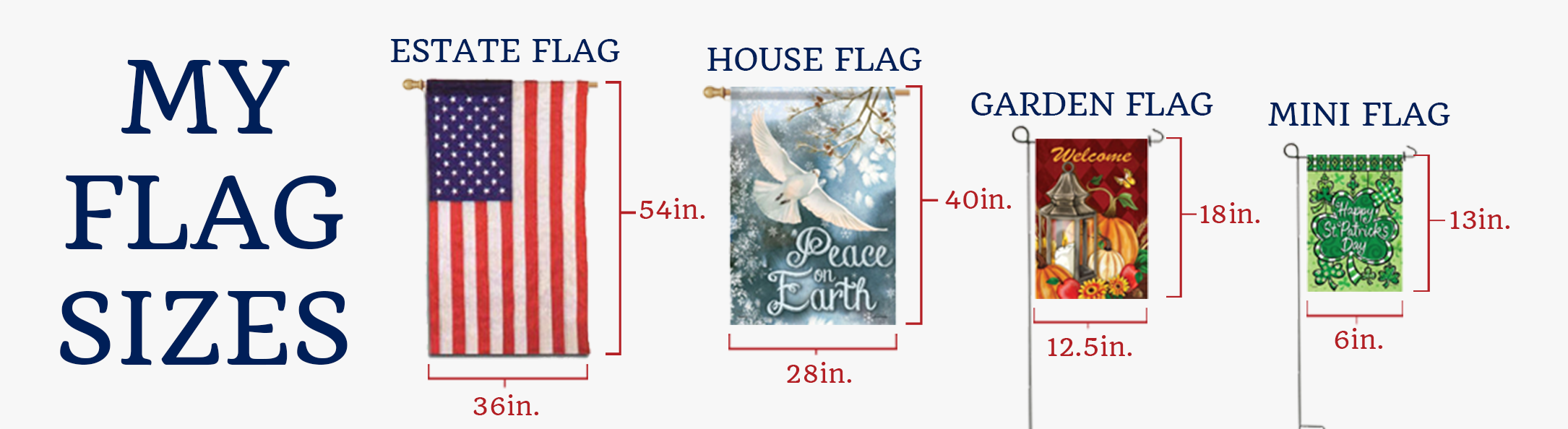 The main sizes of flags are house, garden, banner, estate, or mini.
Standard Flag or House Flag
Most house flags measure about 28" x 40" and install on a 60" pole (bracket and pole sold separately). Also called "Decorative Banner," "Banner Flag," "House Flag," or "Porch Flag."Garden Flag
Most garden flags measure about 12.5" x 18" and hang from a small ground pole or mailbox post. Also called "Mini Flag," "Yard Flag," or "Mailbox Flag."Banner Garden Flag
A taller, more elegant alternative to the standard garden flag, measuring about 12.5" x 28". Fits your existing garden flag stand — no new hardware needed. Perfect for adding vertical interest to smaller outdoor spaces. Available in the America Forever Banner Flags collection: double-sided, 300 denier polyester with block-out material, dye-sublimated with UV protection and weather resistance.Estate Flag
Estate flags are larger flags measuring about 36" x 54" that hang from the same standard flagpole.Mini Flag
Mini flags are very small (6" x 13") — perfect for window boxes, plant pots, or even cakes.
What are the Different Types of Flags?
There are two basic types of decorative flags:
Printed
Printed flags are made of fade-resistant polyester with artwork transferred to fabric through heat sublimation.Appliqued
Appliqued flags feature bright colors on fade-resistant fabrics — stitched like a quilt rather than heat sublimated. Sizes vary by vendor.
Single Applique flags offer good value with quality construction, and look great on both sides thanks to tight embroidery.
Double Applique flags are actually two flags sewn together with batting between them, making text readable on both sides and adding a 3D effect.
What are the Different Kinds of Flag Fabric?
Most manufacturers use a variation of polyester, just under different names. Sublimated flags come in two types. Other fabric choices include burlap, linen, or metal.
Standard Polyester
Weather-resistant, fade-resistant, and durable, yet soft enough to drape and move beautifully in the breeze. Less prone to fuzzing than thicker polyester. Permanently dyed, vivid, and machine washable — drip dry only (dryer use is at your own risk).Soft & Thicker Polyester
Made of soft, thicker polyester that allows printing on both sides. Velvety smooth, but prone to fuzzing if hung where it rubs against shrubs or buildings. Machine washable, drip dry.Burlap
Burlap flags bring an elegant, rustic look to your yard. Evergreen and Custom Decor burlap flags are made of durable burlap; Toland burlap flags have the same rustic look but are made of polyester.Linen
Linen flags are made of high-quality, polyester-based linen-like fabric, specially treated to withstand changing outdoor weather. Available from Evergreen.Metal
Metal flags are lightweight, powder-coated metal designed to withstand changing outdoor weather. Available from Carson.
Are Flags One Sided or Two Sided?
Most flags are single-sided, with the design printed on one side and showing through the back as a reverse image.
 |
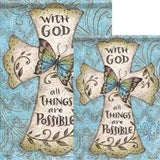
Single-sided: design printed on one side, visible in reverse on the back. |
 |
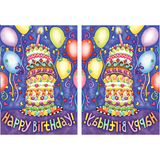
Some flags have the design printed on both sides, but text reads correctly only from one side. |
 |
Double-sided flags have two different designs sewn back to back — essentially two flags in one. |
How Should I Take Care of My Flag?
Taking your flag down at night and during inclement weather can significantly extend its life.
Rotate Seasonally: Direct sunlight is the leading cause of color fading on any outdoor flag. Rotating between 2–3 flags every 2–3 months dramatically extends vibrancy — and gives you a great excuse to build a collection.
Cleaning Your Flag: Regular cleaning prevents dirt and dust from setting into the fabric and helps retain bright colors.
Do not machine wash — it can wear the fabric and fade colors. Gently hand wash with mild detergent in cold water, and don't let the flag soak (which can cause color bleeding).
Rinse thoroughly in cold water and spread out to air dry. Never put flags in the dryer.
Do not bleach or dry clean — both can permanently damage fibers and colors.
Flags generally don't need ironing. If you must, use a warm iron on a low setting, on the back of the flag only.Storage: Never fold, roll, or store a flag while wet — dampness leads to mildew, mold, and discoloration. Always dry completely before storing in a cool, dry, dark place. A flag storage organizer keeps your collection protected and organized.
Harsh Weather: Take outdoor flags down during high winds, storms, heavy rain, snow, or hail. Wet flags get heavy, and strong wind on heavy fabric strains the stitching and accelerates wear. Bring flags in overnight during rough weather seasons — conditions can change before you notice.
Maintenance & Repair: A quick fix now prevents a bigger problem later. Periodically check the "fly" end (farthest from the pole) for signs of wear. Small rips or thread breaks can be trimmed and re-hemmed; small tears can be hand-stitched or machine sewn.
Build a Collection of 2 or 3 Flags: For the best results, we recommend keeping more than one flag on hand — so you always have a fresh one flying while another is being washed, repaired, or stored ready for the next season.